
Different Varieties of Basbousa for Fans of Middle Eastern Desserts
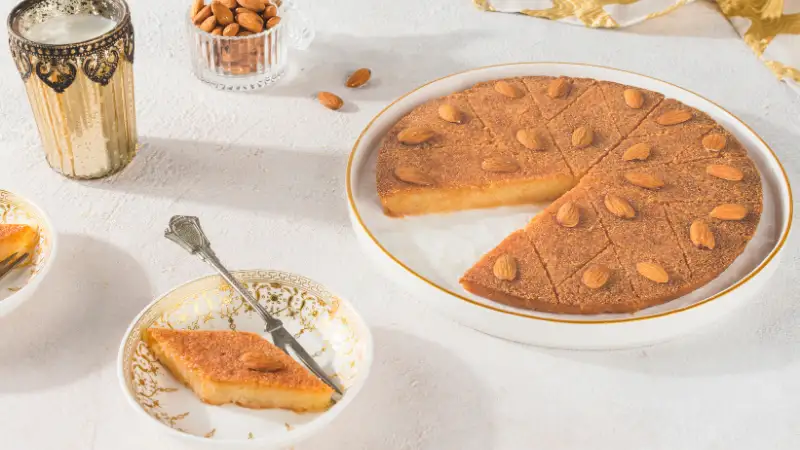
Basbousa Types
Basbousa is one of the most famous and beloved Arabic desserts — a sweet that perfectly combines simplicity in ingredients with richness in flavor. From Egypt to the Levant, and from Turkey to the Gulf, every country has added its own unique touch to this golden delicacy.
In this article, we will explore the different types of basbousa, their origins, classifications, secrets for perfect preparation, and the most renowned places to buy them.
What is Basbousa?
Basbousa is a traditional Middle Eastern dessert made mainly from semolina, sugar, butter or ghee, and syrup (also known as qater or sharbat).
It is characterized by its rich taste and firm texture, often topped with almonds or pistachios. It’s baked until golden and then soaked in warm syrup, giving it its signature sweetness.
The secret to a perfect basbousa lies in balancing the ingredients — it should neither be too dry nor too moist, but right in between. This balance makes it one of the most popular desserts on the Arabic table, especially during Ramadan and festive occasions.
Types of Basbousa by Ingredients
♦ Yogurt Basbousa
Yogurt basbousa is among the most popular versions. The yogurt adds a tender texture and moist consistency that melts in your mouth.
Semolina, sugar, and ghee are mixed with natural yogurt — sometimes with a touch of shredded coconut — then baked until golden and soaked in syrup.
It’s often garnished with coconut flakes or pistachios for an extra luxurious taste.
Perfect for those who enjoy the classic, balanced flavor between sweetness and softness.
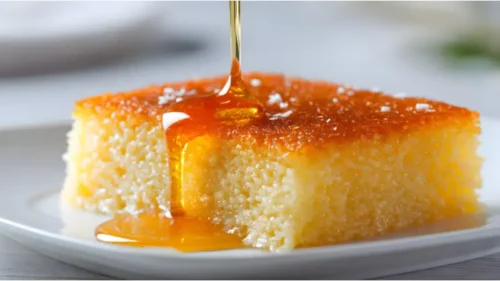
♦ Coconut Basbousa
This variation brings together the essence of the Middle East with a tropical twist. Similar in preparation to the previous recipe, the addition of coconut gives it a light crunch and aromatic flavor.
Coconut is blended with semolina, sugar, butter, and yogurt, resulting in a denser and richer texture. After baking, it’s soaked in light syrup and served on festive occasions thanks to its celebratory appeal.
Coconut basbousa pairs beautifully with coffee or tea.
♦ Cream-Filled Basbousa (Qishta Basbousa)
If traditional basbousa is a symbol of simplicity, the cream-filled version represents pure indulgence.
It’s stuffed with a rich layer of fresh Arabic cream (qishta) and baked until the top turns golden, then drenched in light syrup.
The result? A heavenly blend of creamy texture and soft sweetness — a favorite in weddings and special celebrations.
♦ Chocolate Basbousa
Chocolate basbousa is a relatively modern twist that merges the charm of Middle Eastern desserts with a Western flair.
Cocoa powder is added to the basic mixture, and sometimes it’s filled with dark chocolate chunks or Nutella.
The result is an irresistible flavor that appeals to both adults and kids alike.
It’s a trendy choice for modern gatherings and youth parties.
♦ Pistachio or Mixed Nuts Basbousa
Pistachios and nuts are the crowning glory of basbousa. They can be used for topping or filling — commonly pistachios, almonds, or walnuts — and are often featured in festive versions.
These are considered among the most luxurious and in-demand types in high-end pastry shops, admired for their beautiful appearance and refined taste.
Types of Basbousa by Country of Origin
1️⃣ Egyptian Basbousa
The Egyptian basbousa is the most famous and classic version in the Arab world — it is the origin from which most other types evolved.
It is usually made with coarse semolina, sugar, ghee, and yogurt, then topped with almonds or hazelnuts before baking.
After baking, it is soaked in warm syrup (sharbat), giving it a rich and moist texture.
What distinguishes Egyptian basbousa is its balance between sweetness and flavor — not overly sweet, with a golden crust and a soft, spongy center.
You’ll often find it served in every Egyptian home during holidays and Ramadan.
Some variations include Coconut Basbousa and Plain Basbousa without yogurt, depending on family tradition.
2️⃣ Levantine Basbousa (Bil-Kishta or Harissa)
In the Levant region (Syria, Lebanon, Jordan, and Palestine), basbousa is often called “Harissa” or “Nammoura”.
It’s slightly denser than the Egyptian version and is typically made with fine semolina, giving it a smooth and cohesive texture.
Levantine basbousa is often flavored with rose water or orange blossom water, giving it an aromatic, delicate scent that distinguishes it from the Egyptian version.
A popular Levantine variety is Harissa bil-Kishta — stuffed with fresh cream and topped with crushed pistachios, creating a luxurious balance of flavor and presentation.
3️⃣ Gulf Basbousa (Khaleeji Style)
In the Gulf countries, basbousa takes on a slightly richer form, often using cardamom, saffron, or rose water for a distinct aroma.
Some versions include sweetened condensed milk or evaporated milk, adding extra creaminess and sweetness.
It’s also common to see Coconut Basbousa or Basbousa with dates, reflecting the local preference for rich, festive sweets.
The Gulf-style basbousa is usually more buttery and aromatic — often served during Eid and family gatherings alongside Arabic coffee.
♦ Palestinian Harissa
In Palestine, basbousa is known as harissa, one of the oldest traditional desserts.
It’s made in a simple way using a mixture of semolina, sugar, and ghee, then soaked in syrup immediately after baking.
It’s known for its dense texture and rich sweetness and is often sold in local sweet shops alongside knafeh and qatayef.
4️⃣ Turkish Basbousa (Revani)
In Turkey, basbousa is known as “Revani”, a dessert that closely resembles the Arabic version but with a few differences.
It’s lighter in texture, often made with a mixture of flour and semolina, and flavored with lemon zest or vanilla instead of rose water.
The syrup used in Revani is thinner and less sweet, which makes it perfect for those who prefer a lighter dessert.
It’s usually served cold and cut into neat squares, sometimes topped with coconut or powdered sugar.
5️⃣ Greek Basbousa (Ravani or Samali)
In Greece, this dessert is called Ravani or Samali, and it shares its Middle Eastern roots.
It’s typically flavored with lemon syrup and grated orange peel, giving it a refreshing citrus note.
Greek Ravani is often decorated with almonds and served chilled with whipped cream or a scoop of ice cream.
The Greek version is lighter, slightly less sweet, and often accompanied by a cup of Greek coffee.
Types of Basbousa by Dietary Preference
1️⃣ Keto Basbousa
With the growing popularity of low-carb diets, Keto Basbousa has become a perfect alternative for dessert lovers who follow the keto lifestyle.
In this version, traditional semolina is replaced with almond flour or coconut flour, and natural sweeteners such as erythritol or stevia are used instead of sugar.
The result is a dessert that retains the authentic Middle Eastern flavor while being lighter and healthier.
Keto basbousa is baked in the same way as the classic one and soaked in a sugar-free syrup made from natural ingredients like honey or monk fruit extract.
It’s typically garnished with nuts or coconut flakes, making it both elegant and satisfying — a smart choice for those seeking pleasure without guilt.
2️⃣ Vegan Basbousa
For plant-based diet enthusiasts, Vegan Basbousa is a delightful option that’s completely free of animal products.
Butter or ghee is replaced with coconut oil or olive oil, and almond milk or coconut milk is used instead of dairy yogurt.
This version has a naturally light and clean flavor, with a tender texture that melts in your mouth.
Adding vanilla extract, cinnamon, or cardamom enhances its aroma beautifully.
Vegan basbousa is not only a healthier choice but also suitable for people with lactose intolerance or those who prefer sustainable eating habits — all without sacrificing the authentic Eastern sweetness.
3️⃣ Gluten-Free Basbousa
For people with gluten sensitivity or celiac disease, there’s a Gluten-Free Basbousa variation that’s equally delicious.
Instead of semolina, it uses rice flour, corn flour, or almond flour, which provides a similar texture with a slightly softer consistency.
Despite the substitution, this version maintains the familiar basbousa taste — moist, aromatic, and delicately sweet.
It’s often paired with light syrup and natural oils, offering a dessert that’s both easy to digest and rich in flavor.
Gluten-free basbousa proves that even traditional desserts can evolve to fit modern dietary needs without losing their heritage.
♣ Nutritional Analysis of Different Types of Basbousa
| Type | Calories (per 100g) | Fat | Sugar | Protein |
|---|---|---|---|---|
| Traditional | 320 | 12g | 35g | 4g |
| With Cream | 380 | 18g | 30g | 5g |
| Keto | 250 | 20g | 5g | 6g |
| Vegan | 290 | 14g | 28g | 3g |
Secrets of Making the Perfect Basbousa
1️⃣ The Semolina — the heart of basbousa
Semolina is the key ingredient that defines the texture and success of your basbousa.
Using the right type of semolina makes all the difference:
-
Coarse semolina gives a firm, slightly grainy texture.
-
Fine semolina creates a softer, smoother consistency.
-
Many chefs mix both types to achieve a perfect balance between softness and structure.
👉 Pro tip: Do not overmix the batter — gentle mixing is enough to combine ingredients without making the texture dense.
2️⃣ The Syrup (Sharbat) — the soul of basbousa
The syrup gives basbousa its signature sweetness and moistness.
It’s made by boiling sugar, water, and a squeeze of lemon juice, then allowed to cool before pouring over the hot dessert.
To get the ideal syrup:
-
It should be medium in thickness — not too light (which makes the basbousa soggy), and not too thick (which prevents absorption).
-
You can add rose water, orange blossom water, or vanilla to enhance the flavor and preserve the authentic Middle Eastern aroma.
Common Mistakes to Avoid When Making Basbousa
Many people make small errors that can ruin the texture or flavor of their basbousa. Here are the most frequent ones:
1️⃣ Overmixing the batter — this makes the texture dense and heavy instead of soft.
2️⃣ Pouring hot syrup over a hot basbousa — it causes the dessert to crumble. Always let one cool slightly before combining.
3️⃣ Using the wrong type of semolina — this changes the structure entirely.
4️⃣ Overbaking — makes the basbousa dry and flavorless.
5️⃣Skipping the resting time after adding syrup — essential for proper absorption and texture.
✅ Remember: Perfect basbousa is a combination of patience, precision, and love for the small details.
Simply want to say your article is as amazing. The
clarity in your post is simply cool and i could assume you arre
a professional onn this subject. Well together with your
permission let me too snafch your feed to sta updated with imminent post.
Thank you 1,000,000 and please keep up the gratifying work.