
Puff Pastry vs. Phyllo Dough | Everything You Need to Know
Puff Pastry vs. Phyllo Dough
A deep-dive into origins, ingredients, techniques, textures, nutrition, and the ultimate question — when to use each one.
Puff pastry and phyllo dough share a surface-level similarity that trips up even seasoned home cooks: both are sold frozen, both bake up golden and flaky, and both can anchor sweet or savory recipes with equal confidence. But that’s largely where the resemblance ends. These two pastries belong to entirely different culinary traditions, are built on radically different principles, and produce baked results that are worlds apart in texture, flavor, and structure.
Understanding the distinction between puff pastry and phyllo dough is not merely a matter of baking trivia. It’s the difference between a shattering, paper-thin crunch in your baklava versus a pillowy, butter-rich lift in your beef Wellington. Swap one for the other carelessly, and the results can disappoint — even when the individual ingredients are top-quality.
In this comprehensive guide, we break down every meaningful distinction between these two doughs: their histories, ingredient profiles, preparation methods, textures, best culinary applications, nutritional profiles, and how to substitute one for the other in a pinch. By the end, you’ll never second-guess yourself in that freezer aisle again.
1. Origins & Cultural Heritage
Before you can truly understand these two doughs, it helps to know where they come from — because their geography reveals a great deal about their character.
Phyllo Dough: From the Ottoman Kitchens to the World
The word phyllo (also spelled filo or fillo) is derived from the Greek word for “leaf,” a fitting name for a dough rolled and stretched to translucent, paper-thin sheets. According to MasterClass, the dough likely originated in Turkey, where it is known as yufka, and it became a cornerstone of Ottoman-era cuisine before spreading across the Balkans, the Middle East, and the entire Mediterranean basin.
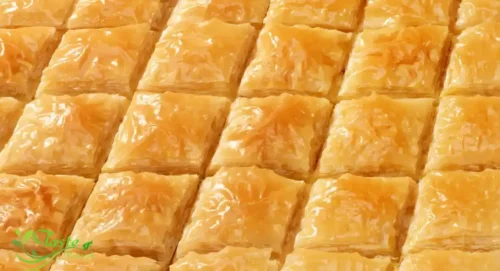
Traditionally, phyllo was made by hand using a long, thin rolling pin called an oklava, a skill that required years to perfect. Bakers would stretch the dough over large tables — sometimes the width of a room — until it was nearly transparent enough to read through. This extraordinary thinness is what gives phyllo-based dishes like baklava, spanakopita, and börek their distinctive, lacework-like crunch.
Today, commercially produced phyllo sheets are made by machine and sold frozen, making this once highly specialized ingredient accessible to home cooks worldwide.
Puff Pastry: The Pride of French Cuisine
Puff pastry — called pâte feuilletée in French, meaning “leafy dough” — is a product of European, and particularly French, culinary tradition. As food historians note, the technique of laminating dough with butter was refined in France during the 17th century, though some attribute its roots to earlier Moorish and Arab pastry traditions.
The French codified and perfected the method — the precise, repetitive process of encasing cold butter within dough and folding it repeatedly — and it became central to French pastry arts. Today, puff pastry is the foundation of some of the world’s most celebrated baked goods: croissants, mille-feuille (Napoleons), vol-au-vents, and the iconic tarte tatin.
“Phyllo dough is the culinary soul of the Mediterranean and Middle East; puff pastry is the elegant backbone of European patisserie. Both traditions span centuries — and both produce something genuinely magical in the oven.”
2. Ingredients: A Study in Contrast
The ingredient lists for these two doughs could not be more different, and those differences cascade into everything: texture, flavor, fat content, and even dietary suitability.
Lean & Simple
- All-purpose wheat flour
- Water
- A small amount of olive oil or vegetable oil
- Vinegar (optional, aids elasticity)
- Salt (sometimes)
- Butter or oil brushed on during assembly, not baked in
Rich & Buttery
- All-purpose or bread flour
- Cold water
- Salt
- A small amount of butter in the dough itself
- Large block of cold butter (the “beurrage”) — folded in
- Sometimes: lemon juice or white wine vinegar
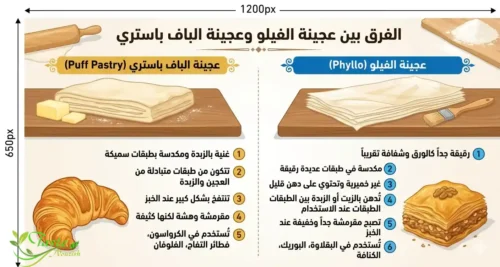
The critical distinction is fat — specifically, where the fat lives and how much of it there is. Food Republic explains that phyllo’s fat is minimal within the dough itself; instead, butter or oil is brushed between the individual sheets at assembly time. Puff pastry, by contrast, encases a substantial slab of cold butter inside the dough before any folding begins.
Phyllo dough is inherently dairy-free — its dough contains only flour, water, and oil. When assembled with olive oil instead of butter between the layers, it becomes fully vegan. Most puff pastry, on the other hand, contains substantial amounts of butter and is never vegan in its traditional form (though vegan puff pastry made with vegetable shortening or plant-based butter is commercially available).
3. How Each Dough Is Made
The preparation methods are where the two doughs diverge most dramatically — and understanding this helps explain why they behave so differently in the oven.
Making Phyllo Dough
Phyllo is made by combining flour, water, oil, and vinegar into a simple, elastic dough. The dough is then kneaded until smooth and rested — often refrigerated overnight — to relax the gluten enough to allow extreme stretching.
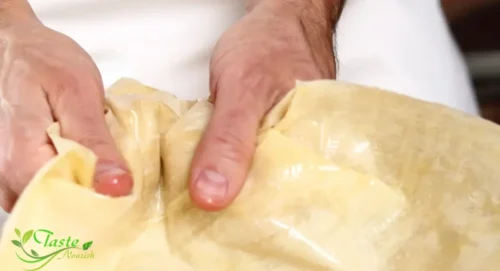
The critical step is rolling and stretching the dough into sheets so thin they are nearly translucent. This is done in stages: first with a rolling pin, then by carefully stretching the dough over the backs of hands or across a large table. Even the slightest tear can compromise the integrity of the sheet. Commercial phyllo is produced by machine and sold as stacks of pre-cut sheets, typically 14 x 18 inches.
During recipe assembly, phyllo is never used alone. Each sheet is brushed with melted butter or oil before the next sheet is placed on top. This external fat is what creates richness and helps the sheets brown and crisp evenly. Most recipes call for anywhere from 5 to 20 or more individual phyllo sheets, depending on the dish.
Phyllo sheets are extremely sensitive to air exposure and will begin to dry, crack, and become unworkable within minutes. Always keep unused sheets covered with a slightly damp kitchen towel while you work. Never leave the package open.
Making Puff Pastry: The Lamination Process
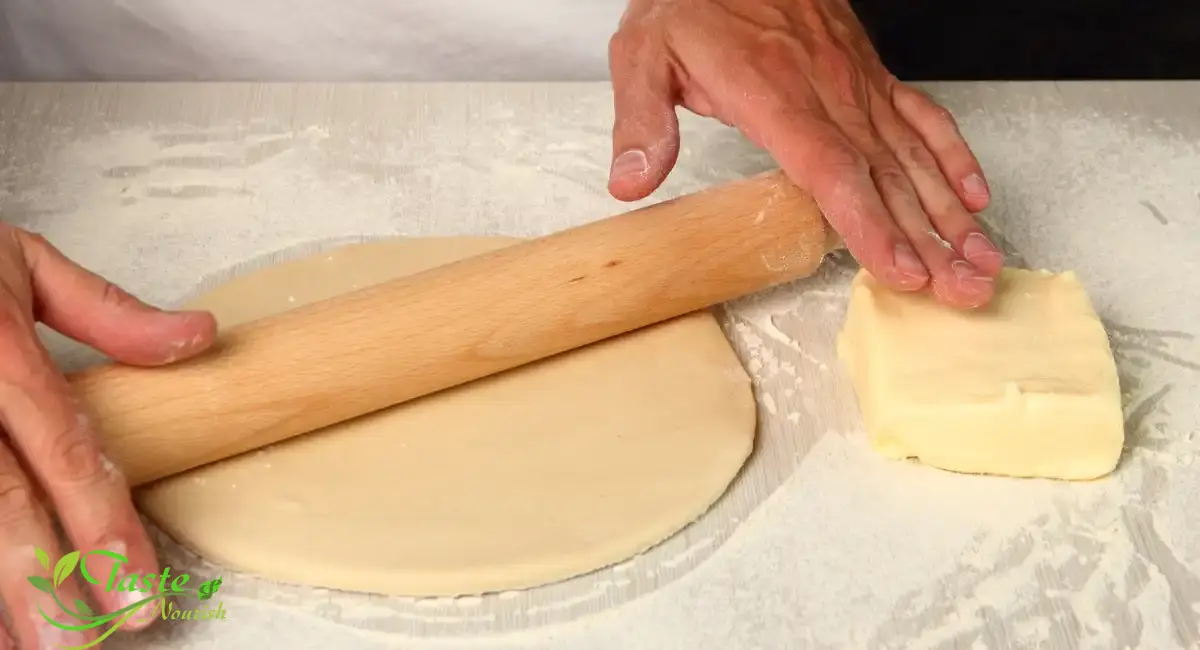
Puff pastry is a laminated dough, meaning it is built through the precise, repeated layering of dough and butter. Taste of Home describes the classic process: a slab of chilled butter (the “beurrage”) is placed inside an envelope of dough (the “détrempe”), then the entire package is rolled flat and folded into thirds — a technique called a “turn.” This is chilled, then repeated. Classic puff pastry goes through six to eight such turns, creating a theoretical count of up to 729 or more paper-thin alternating layers of dough and butter.
When the layered dough enters a hot oven, the water content in the butter converts to steam, and that steam forces the layers apart — producing the iconic “puff.” The fat then coats and crisps the outside of each layer as it bakes.
For home bakers who don’t want to spend hours on the classic method, a shortcut called rough puff (or “blitz puff”) involves cutting cold butter directly into the flour rather than forming a separate butter block. It produces fewer layers but is far faster and still yields excellent results for most recipes.
| Step | Phyllo Dough | Puff Pastry |
|---|---|---|
| Base dough | Flour + water + small amount of oil/vinegar | Flour + water + salt + small amount of butter |
| Key technique | Stretch/roll until paper-thin | Laminate with butter block through repeated folds |
| Fat addition | Brushed between layers at assembly | Folded into the dough during preparation |
| Difficulty (homemade) | High — requires great skill and patience | Medium-High — time consuming but learnable |
| Chilling required? | Resting, but no repeated chilling | Yes — multiple chilling steps are essential |
| Typical # of layers | 5–20+ separate sheets stacked | Hundreds of dough-butter layers within one sheet |
| Homemade time | 2–4 hours | 4–6+ hours (including chilling time) |
Both phyllo and puff pastry are widely available in the freezer aisle, and the commercially prepared versions are excellent. For puff pastry, always choose a brand made with real butter rather than shortening — the flavor difference is significant. For phyllo, any major brand works well; the key is proper thawing (overnight in the refrigerator, never at room temperature).
4. Texture & Appearance When Baked
Perhaps the most telling difference between the two doughs reveals itself the moment they come out of the oven.
Shatteringly Crisp
- Layers stay close together — no dramatic puffing
- Texture is brittle, crackling, paper-thin
- Shatters audibly on first bite
- Golden-brown, almost lacquered appearance
- Lighter flavor — less buttery, more neutral
- Lower rise; stays relatively flat
Lofty & Tender
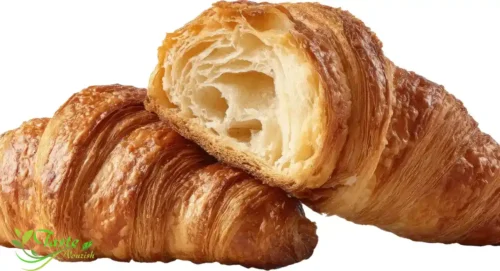
- Dramatic rise — can triple in height
- Tender, airy interior with crisp outer shell
- Soft, melt-in-the-mouth layers inside
- Deep golden-brown, honeycomb cross-section
- Rich, distinctly buttery flavor
- Visible separation of flaky layers
As Parade describes it, baked puff pastry is noticeably lofty, airy, and delicate with a browned crust, while phyllo’s layers are light and close together, so crisp they shatter. Phyllo also carries a less rich flavor since the dough itself contains no butter.
These textural differences are not interchangeable. A dish that calls for the delicate, architectural crunch of phyllo — like baklava or spanakopita — will feel wrong if made with puff pastry, which would turn the recipe into a heavy, doughy mass. Conversely, a beef Wellington or Napoleon made with phyllo would lack the structural integrity and richness those recipes depend upon.
5. Best Culinary Uses for Each
Knowing which dough excels in which context is the practical heart of this comparison. Both are remarkably versatile — but each has a domain where it truly shines.
- Baklava (honey-nut dessert)
- Spanakopita (Greek spinach & feta pie)
- Börek (Turkish savory pastry)
- Samosas (South Asian savory pastries)
- Apple strudel (Austrian rolled pastry)
- Tiropita (Greek cheese pie)
- Galaktoboureko (Greek custard dessert)
- Phyllo cups (small appetizer shells)
- Crinkle cake (Middle Eastern dessert)
- Baked feta cheese wraps
- Beef Wellington (pastry-wrapped tenderloin)
- Croissants (French breakfast pastry)
- Mille-feuille / Napoleons (layered cream dessert)
- Vol-au-vents (hollow pastry cases)
- Tarte Tatin (upside-down apple tart)
- Palmiers (heart-shaped pastry cookies)
- Sausage rolls & pigs in blankets
- Chicken pot pie topping
- Danish pastries with fruit or cheese
- Brie en croûte (cheese wrapped in pastry)
When Flavor Profile Drives the Choice
Consider the flavor you want to feature. Phyllo dough has a neutral, lightly wheaty taste that lets fillings — nuts, honey, cheese, herbs — be the star. Puff pastry contributes its own rich, distinctly buttery character to whatever it wraps or contains, and that flavor is intentional and desirable in most European pastry applications.
Think about it this way: the walnut-honey filling of baklava would be overwhelmed and muddied by buttery, rich puff pastry. But the beef filling of a Wellington needs that surrounding buttery richness to feel complete and satisfying.
6. Puff Pastry vs. Phyllo Dough: Full At-a-Glance Comparison
| Feature | Phyllo Dough | Puff Pastry |
|---|---|---|
| Origin | Turkey / Greece / Middle East | France / Western Europe |
| Also known as | Filo, fillo, yufka | Pâte feuilletée, “rough puff” |
| Main ingredients | Flour, water, oil, vinegar | Flour, water, butter (large quantity) |
| Fat content | Very low (fat added at assembly) | Very high (butter laminated in) |
| Preparation method | Stretched to paper-thin sheets | Laminated via repeated folding with butter |
| Layers | Separate stacked sheets (5–20+) | Hundreds of internal dough/butter layers |
| Baked texture | Shatteringly crisp, close-layered | Airy, puffy, tender interior + crisp exterior |
| Flavor | Neutral, light, lets fillings shine | Rich, buttery, distinctively flavorful |
| Rise in oven | Minimal | Dramatic (can triple in height) |
| Calories (per 100g) | ~305 kcal | ~550 kcal |
| Fat (per 100g) | ~8g (mainly from brushed butter) | ~37–40g |
| Vegan-friendly? | Yes (when assembled with oil) | No (traditional); vegan versions available |
| Homemade difficulty | High | Medium-High |
| Store-bought availability | Frozen (sheets) | Frozen (folded sheets or blocks) |
| Best for | Mediterranean & Middle Eastern dishes, crispy layers | French & European pastries, puffy, rich baked goods |
| Works raw/uncooked? | No — must be baked | No — must be baked |
| Can go vegan easily? | Yes | Requires specific vegan product |
7. Nutrition & Health Comparison
For health-conscious bakers, the nutritional gap between these two doughs is significant and practically important.
Nutritional data from USDA sources shows that per 100 grams, puff pastry contains roughly 1.8 times more calories, 6.4 times more total fat, and 6.6 times more saturated fat than phyllo dough. That is not a minor difference — it is a fundamentally different caloric and fat profile.
| Nutrient (per 100g) | Phyllo Dough | Puff Pastry (frozen) | Winner (lower is better for fat/cal) |
|---|---|---|---|
| Calories | ~305 kcal | ~550 kcal | Phyllo |
| Total Fat | ~8g | ~37–40g | Phyllo |
| Saturated Fat | <1g | ~20–22g | Phyllo |
| Carbohydrates | ~57g | ~44–58g | Similar |
| Protein | ~8g | ~7g | Similar |
| Cholesterol | 0mg | High (from butter) | Phyllo |
| B Vitamins (B1, B2, B6) | Higher | Lower | Phyllo |
| Vitamin E & K | Lower | Higher (from butter) | Puff Pastry |
Data sourced from USDA National Nutrient Database and vegnt.com comparative analysis. Values are approximate and vary by brand and recipe.
🔑 Key Nutrition Takeaway
If you’re managing calorie or fat intake, phyllo dough is the substantially lighter option — roughly half the calories and 6x less fat per 100g compared to puff pastry. That said, when phyllo is generously buttered between every layer (as in baklava), the final dish’s fat content rises considerably. The dough itself is lean; how you assemble it determines the final nutritional picture.
8. Can You Substitute One for the Other?
This is one of the most commonly searched questions about these two doughs — and the honest answer is: sometimes, with significant caveats.
Substituting Puff Pastry for Phyllo
Puff pastry can stand in for phyllo in some situations, but the result will be fundamentally different. You’ll lose the shatteringly thin, crackling crispness of phyllo and gain a thicker, puffier, more bread-like texture instead. For dishes like spanakopita or baklava, this substitution typically doesn’t work well — the structural integrity and characteristic crunch are essential to those dishes. For recipes that just need a flaky pastry wrapper (like simple tartlets or hand pies), puff pastry can fill in reasonably well.
Substituting Phyllo for Puff Pastry
The reverse is trickier. Phyllo lacks the internal butter structure that causes puff pastry to rise dramatically, so you won’t get the airy, lofty lift you’d expect from, say, a vol-au-vent or Napoleon. Multiple brushed-butter phyllo sheets can create a pleasingly flaky crust, but the texture will be crunchier and crisper rather than puffy and tender. For something like a rough pot pie topping or a simple cheese tart, several stacked phyllo sheets can work in a pinch.
| Dish / Application | Can Phyllo Replace Puff? | Can Puff Replace Phyllo? | Notes |
|---|---|---|---|
| Baklava | — | ❌ No | Puff pastry creates wrong texture; phyllo is essential |
| Spanakopita | — | ❌ No | Puff would make it heavy; phyllo crunch is key |
| Beef Wellington | ⚠️ Risky | — | Multi-layer phyllo can work but won’t puff the same way |
| Pot pie (topping) | ✅ Yes | ✅ Yes | Both work well; results will differ in texture |
| Apple strudel | — | ⚠️ Risky | Puff pastry will work but produces a very different dish |
| Simple cheese tarts | ✅ Yes | ✅ Yes | Both work; texture will vary |
| Croissants | ❌ No | — | Phyllo cannot replicate the layered, puffy croissant structure |
| Mille-feuille / Napoleon | ❌ No | — | Puff’s rise is structurally essential here |
If a dish’s identity is defined by its pastry’s texture (baklava’s crunch, Wellington’s puff), do not substitute. If the pastry is more of a vehicle for a filling, limited substitution is possible — but adjust your expectations for the final result accordingly.
9. Buying & Storing Tips
Shopping for Puff Pastry
- Always choose a brand made with real butter rather than vegetable shortening or margarine — the flavor difference is enormous. Look for “all-butter puff pastry” on the label.
- It comes in both folded flat sheets (most common in the US) and block form (common in the UK and Europe). Blocks are more flexible for shaping.
- A standard US package typically contains two sheets, each roughly 10×15 inches when unfolded.
- Thaw overnight in the refrigerator for best results. At room temperature, it can thaw in about 30–45 minutes — but don’t let it get warm or it becomes sticky and unworkable.
- Never refreeze puff pastry that has already been thawed — the layers break down and it won’t puff properly.
Shopping for Phyllo Dough
- Phyllo is sold in the freezer section, typically in 1-pound boxes containing stacked sheets. The two most common sizes are #4 (full-size sheets) and #10 (thicker sheets for strudel).
- Always thaw phyllo overnight in the refrigerator — never at room temperature. Rapid thawing makes the sheets damp and gluey, causing them to stick together and tear.
- Once thawed, do not separate the sheets until you are ready to use them, as they can crack if handled while still cold.
- Unused thawed phyllo can be refrigerated in its box, tightly wrapped, for up to one week. Do not refreeze once thawed.
- While working, always keep the unused portion of the phyllo stack covered with a barely damp kitchen towel to prevent drying.
| Storage Factor | Phyllo Dough | Puff Pastry |
|---|---|---|
| Frozen shelf life | Up to 1 year (sealed) | Up to 1 year (sealed) |
| Thawing method | Overnight in refrigerator only | Refrigerator overnight OR 30–45 min at room temp |
| After thawing (fridge) | Up to 1 week (tightly wrapped) | Up to 3 days |
| Can re-freeze after thawing? | Not recommended | Not recommended |
| Biggest enemy | Air exposure (dries out instantly) | Warmth (butter melts, layers break down) |
10. Frequently Asked Questions
Is phyllo dough the same as puff pastry?
No — they are distinct doughs with different ingredients, preparation methods, textures, and culinary origins. Phyllo is a lean, paper-thin dough from the Middle East and Mediterranean; puff pastry is a butter-rich, laminated dough from the French culinary tradition. While both are flaky, the similarity ends there.
Which is healthier, phyllo or puff pastry?
Phyllo dough is significantly lower in calories and fat in its base form. Per 100g, phyllo has roughly 305 calories and 8g of fat, compared to ~550 calories and 37–40g of fat for puff pastry. However, because phyllo recipes often call for generous amounts of butter brushed between layers, the finished dish’s nutritional profile depends heavily on how it’s assembled.
Can I make phyllo dough or puff pastry at home?
Both can be made at home, though neither is easy. Homemade phyllo requires stretching the dough to translucent thinness — a skill that takes practice. Homemade puff pastry requires multiple precise folding-and-chilling cycles with cold butter. Store-bought frozen versions of both are excellent and recommended for most home bakers. Taste of Home notes that commercially prepared phyllo can be as good as homemade.
Why does phyllo dry out so fast?
Phyllo sheets are extremely thin — often less than a millimeter — and contain very little fat to hold moisture. When exposed to air, the sheets lose moisture rapidly and become brittle and crumbly. Always keep them covered with a damp towel while you work.
Can puff pastry go vegan?
Traditional puff pastry is not vegan due to its substantial butter content. However, vegan puff pastry made with plant-based butter or vegetable shortening is commercially available — check labels carefully. Phyllo dough, by contrast, is naturally dairy-free and becomes fully vegan when assembled with olive oil instead of butter.
What’s the difference between filo, phyllo, and fillo?
These are simply different transliterations of the same Greek word into English. All three spellings — filo, phyllo, fillo — refer to the exact same paper-thin pastry dough. You’ll see all three on commercial packaging depending on the brand or country.
Does puff pastry need egg wash?
Puff pastry doesn’t require egg wash to puff and bake, but an egg wash (egg beaten with a little water or milk, brushed onto the surface before baking) gives it a deeper, more uniform golden-brown color and a shiny, professional appearance. It’s recommended for most recipes where appearance matters.
Final Verdict: Which Should You Choose?
There is no universal “better” dough — the right choice depends entirely on what you’re making and what result you’re after.
Choose phyllo dough when you want a delicate, shattering crunch; when your filling is the star and you don’t want a heavy, rich pastry competing with it; when you’re cooking within Mediterranean or Middle Eastern traditions; or when you’re looking for a lower-fat option.
Choose puff pastry when you want dramatic height and an airy, tender interior; when rich, buttery flavor is part of what makes the dish great; when you’re making French or European pastries that depend on the laminated structure; or when visual impact and lofty rise are important to the presentation.
✦ The Bottom Line
Phyllo dough and puff pastry are not rivals — they are complementary tools in an accomplished baker’s arsenal. Master both, understand where each one belongs, and you’ll have the confidence to take on an enormous range of the world’s most beloved pastry dishes. Stock both in your freezer, follow the thawing guidelines, and never again confuse these two magnificent doughs.